For hospice and home-health organizations, staffing after-hours shifts presents a unique challenge. Patients’ needs don’t magically pause between office hours, yet many agencies still rely on outdated scheduling models that leave nurses exhausted, escalation rates high, and patient satisfaction vulnerable. In this post, we’ll explore how thoughtful scheduling, strategic outsourcing, and nurse-first triage support can sustain 24/7 care while safeguarding your team and your mission.
1. Involve Your Nurses in Scheduling Decisions
When you ask nurses for input on on-call rotations, you build trust and better outcomes.
- Bring your team together to ask: “What after-hours pattern works for us, for our patients, and for our staff?”
- Let nurses select preferred on-call days or weekend blocks, giving them a sense of ownership and balance.
- Transparent communication about responsibilities (what “on-call” entails, how handoffs work, etc.) increases buy-in and reduces burnout.
2. Build Transparent Rotation Models with Strategic Pairings
Schedules that consider rest, teamwork, and timing outperform the “everyone-take-a-turn” approach.
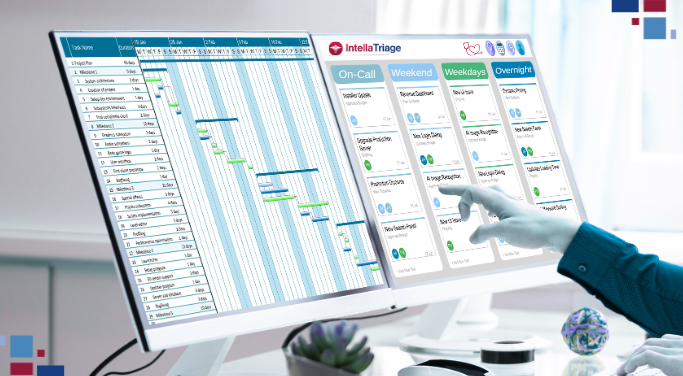
- Example: A weekday case-manager covers 5 pm–9 pm, then hands off to a dedicated on-call partner for the rest of the night so everyone arrives fresh and ready to provide coverage and has reasonably sufficient rest for their next shift.
- Weekend/night patterns that reward daytime relief (e.g., nurse works weekend, gets Monday off) help preserve energy and morale.
3. Learn From What Doesn’t Work. Iterate on What Works.
Effective scheduling isn’t set-it-and-forget-it. It evolves through feedback and data.
- Examine exit interviews, survey responses, and patient-satisfaction trends for signs of on-call fatigue.
- Ask: Why are my strongest nurses leaving? Often, it’s the strain of being unrelentingly “always on duty”.
- Adjust your model based on findings in order to balance clinical load, emotional impact, and personal time. What works in theory may not work in practice until refined.
4. Think Outside the Traditional “On-Call” Box
If the goal is to meet patient needs and respect nurse wellbeing, sometimes you need a fresh approach.
- Consider non-standard rotations: e.g., a nurse works Friday night, has off Saturday, resumes on Sunday; or weekend-only teams with subsequent weekdays off.
- If a model satisfies patients and supports nurses, it’s worth testing even if it doesn’t look like the “old way.”
5. Support Nurses So They Can Support Patients
Your scheduling strategy should enable nurses to bring their best clinically sharp, emotionally available, and fully engaged selves to the bedside.
- Recognize that today’s patient populations are sicker, more complex, and emotionally heavy.
- A rested nurse can provide compassion and clinical acumen; a drained nurse cannot.
- View scheduling as a clinical strategy: when nurses are supported, patients receive better care.
6. Extend Your After-Hours Strategy with Nurse-First Triage
To truly relieve on-call burden while maintaining high-quality care, consider outsourcing or supplementing with a nurse-led triage service.
- Nurse triage does more than simply answer calls. Clinically based triage resolves a high percentage of after-hours issues, so your field staff are free to focus on in-home care.
- These services integrate with your protocols and EMR, offering patients rapid licensed nurse access and your nurses the rest they need.
- When staffing becomes difficult or calls spike, this model offers flexibility and stability.
A Quick Final Thought:
After-hours coverage, while often viewed as an operational checkbox, is integral to care quality, nurse retention, and patient experience. Scheduling models that work for your staff, paired with nurse-first triage support, bring you closer to a 24/7 care system that is sustainable, scalable, and deeply centered on both staff well-being and patient outcomes.
IntellaTriage has spent years refining what nurse-first after-hours care looks like in practice. If your team needs to rethink on-call staffing, restore energy to your nurses, and elevate the patient experience, the right scheduling strategy and the right partner can make all the difference.
Contact Us for a Consultation
Ready to optimize your triage process? Reach out to us today for a consultation tailored to your needs. Let’s elevate your patient care together.
More From The Blog

A hospice or home health nurse arrives for a scheduled patient visit. Then their cell phone rings with a medication question, a scheduling issue, a caregiver concern... a call that needs to be routed elsewhere. Individually, each type of interruption may seem manageable. Across an entire care team and multiple scheduled visits, they add up [...]
Every triage vendor can hand you a feature list, and most of them overlap. Twenty-four-seven coverage. EMR access. Reporting dashboards. HIPAA compliance. Line the sheets up side by side, and the vendors start to look interchangeable. They aren't. The feature list is just the wrong instrument for telling them apart, because while standard features describe [...]
The best patient engagement often shows up in what doesn't happen. A caregiver doesn't reach the point of panic before seeking help. A change in pain or anxiety doesn't go unnoticed between visits. A medication question doesn't become an after-hours crisis. A family doesn't begin questioning the hospice plan of care because they feel unsupported. [...]