IntellaHub:
Nurse-First Triage Technology
The Connected Clinical Operations Platform Behind Nurse-First Triage
IntellaHub is IntellaTriage’s proprietary clinical communication and triage platform, purpose-built for hospice, home health, and health plan care workflows. Designed to support real-time clinical decision-making, seamless EMR integration, and faster access to care, IntellaHub helps providers improve patient experience, reduce nurse burden, and strengthen operational performance across all hours of care.

Average Speed-to-Nurse: 37 Seconds

Supports 24/7 Nurse-first Workflows

HITRUST i1 Certified Integration

Award-winning Interoperability Platform
Built for Nurses. Designed for Real Care.
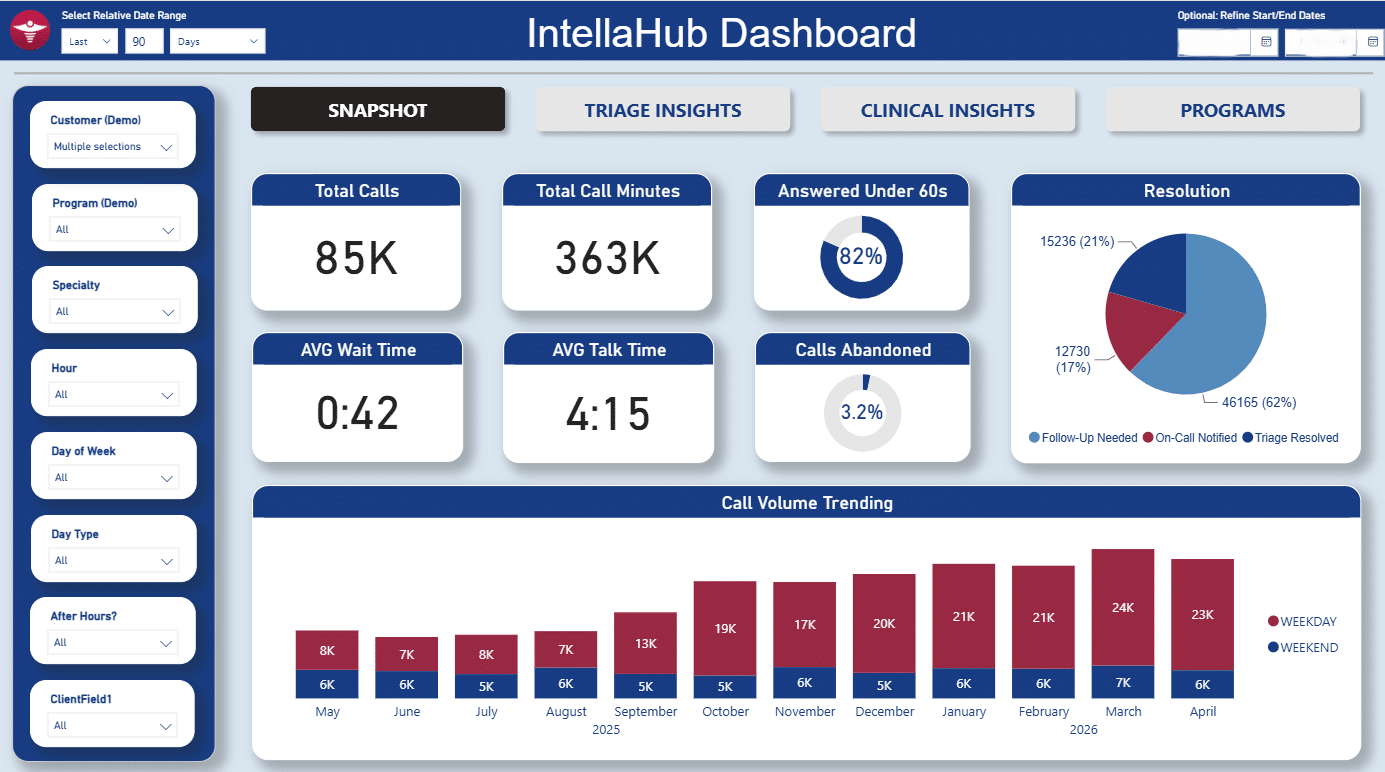
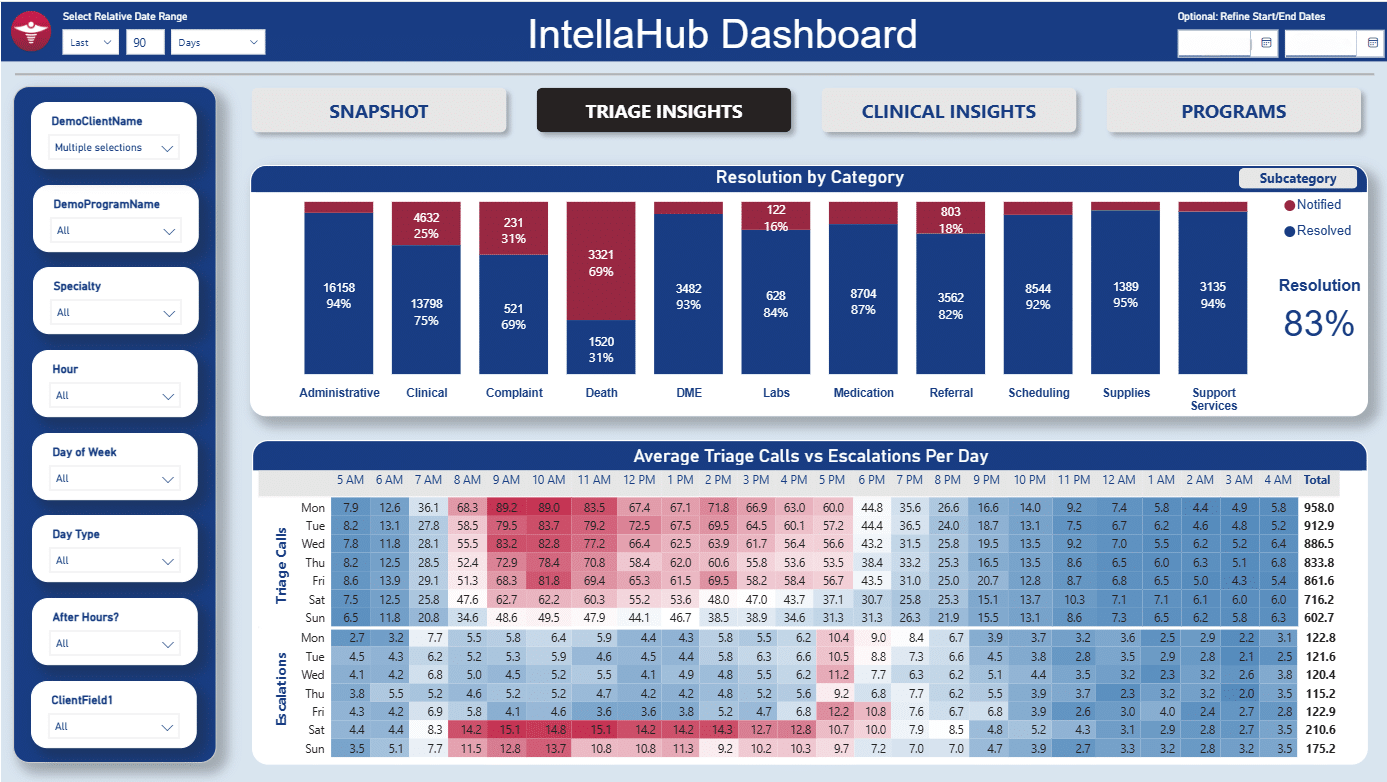
IntellaHub is a purpose-built triage platform designed specifically for triage workflows. Real-time dashboards and reporting tools transform after-hours and care coordination data into actionable operational insight. Providers gain visibility into patient call trends, triage resolution rates, escalation patterns, response times, staffing needs, and operational performance.
The IntellaHub platform enables our nurses to access patient and provider information the moment a call comes through and follow customized, clinically sound triage pathways. Via IntellaHub, triage nurses communicate clearly with field teams in real time and document directly in your EMR, avoiding duplicate work.
The result: faster access to care, more consistent decisions, and a better experience for patients, caregivers, and clinicians alike.
Triage Performance Analytics
Track resolution rates, escalation percentages, speed-to-nurse metrics, and patient call trends to better understand after-hours demand and optimize staffing strategies.
Real-Time Visibility Into Clinical Operations
IntellaHub transforms after-hours and care coordination data into actionable operational insight. Through real-time dashboards and reporting tools, providers gain visibility into patient call trends, triage resolution rates, escalation patterns, response times, staffing needs, and operational performance.
More Than a Basic EMR Integration
Human-first does not mean low-tech. IntellaHub combines compassionate clinical expertise with sophisticated interoperability and operational intelligence designed specifically for the complexities of post-acute care. IntellaHub integrations are designed to support true clinical interoperability, not just basic patient lookup or message transfer capabilities.
While many after-hours solutions rely on limited integrations or fragmented workflows, IntellaHub was purpose-built for nurse-first care delivery. By providing real-time access to deeper patient data within the triage workflow, IntellaHub enables nurses to complete more comprehensive clinical triage, reduce unnecessary escalations, and improve continuity of care across after-hours and daytime teams.

Real-Time Patient Data Access
IntellaHub automatically surfaces the demographics, care teams, medications, diagnoses, allergies, and recent documentation needed for appropriate triage during inbound calls for our triage team. Nurses spend less time searching for information and more time delivering timely, informed care decisions.
Intelligent Clinical Routing
Background AI-assist supports our triage nurses with clinically aligned triage pathways and customized workflows based on provider protocols, so they can focus more fully on the call at hand. Faster, more consistent triage workflows ensure patients reach the right level of care at the right time.
Advanced Analytics and Benchmarking
Gain visibility into speed-to-nurse performance, resolution rates, escalation trends, call volumes, and operational patterns through real-time dashboards and reporting tools. Turn after-hours activity into actionable operational insight.
Secure Interoperability
IntellaHub seamlessly integrates with leading EMR platforms to reduce duplicate documentation, improve continuity of care across care teams, and streamline communication throughout the patient journey. IntellaHub integrations support deeper clinical workflows, not just basic data exchange.
HITRUST-Certified Security
IntellaHub protects sensitive patient information with enterprise-grade cybersecurity standards and HITRUST i1 certification. Our platform is designed to support secure, compliant communication and documentation workflows across all hours of care.
AI-Supported Workflows That Keep Care Human
IntellaHub leverages innovative AI-supported tools behind the scenes, including quality-assurance workflows, operational insights, and support for the Schmitt-Thompson triage pathway, to help nurses deliver more efficient, consistent care. Patients never experience technology replacing compassion. They simply experience faster, smoother access to experienced nurses backed by smarter clinical infrastructure.
Technology That Supports Nurses, Not Replaces Them
IntellaHub combines intelligent workflows, automation, interoperability, and AI-supported operational tools with experienced licensed nurses trained specifically in home health and hospice triage.
Rather than replacing clinical judgment, the platform removes friction behind the scenes:
- reducing manual work
- organizing patient information
- streamlining documentation
- improving communication
- surfacing operational insights
This allows nurses to stay focused on what matters most: delivering compassionate, clinically sound care.

Why Interoperability Matters in Triage Care
Fragmented systems and disconnected workflows create delays, increase nurse burden, and contribute to communication breakdowns across care teams. In home health and hospice, where care often transitions between daytime and after-hours staff, interoperability is critical to maintaining continuity, improving patient experience, and reducing operational inefficiencies.
IntellaHub was designed to close these gaps by connecting nurses with the information they need in real time while improving visibility across the entire care continuum.
Common Questions
What is a healthcare triage platform? A healthcare triage platform is purpose-built software that supports clinical telephone triage from call routing and queue management to structured clinical documentation, protocol access, EMR integration, and QA monitoring. It’s the operational backbone for a triage team, designed to ensure that every call is handled consistently, documented completely, and visible to the broader care team. It’s fundamentally different from a general-purpose call center platform, which is built for customer service workflows rather than clinical ones.
How does IntellaHub differ from a call center platform? IntellaHub was designed from the ground up for clinical triage, not adapted from a customer service tool. It supports licensed nurse workflows, integrates directly with electronic medical record systems, provides access to Schmitt-Thompson evidence-based protocols, and includes AI-powered QA monitoring to ensure consistent, high-quality triage. A call center platform manages queues. IntellaHub supports clinical care.
How does IntellaHub use AI? IntellaHub uses AI in several ways. The primary AI levers that support our client base today are QA monitoring, which reviews triage calls for protocol adherence, documentation quality, and communication standards, and supervisory analytics, which help triage managers identify coaching needs and track performance trends. AI in IntellaHub works behind the scenes, improving the quality and consistency of nurse-patient interactions without inserting itself into them.
How do EMR integrations improve after-hours care? When a triage nurse can see a patient’s medication list, recent visit notes, advance directives, and care plan during the call, rather than working from memory or asking the family to read pill bottle labels in the dark, the quality of clinical assessment improves significantly. EMR integration also means that after-hours documentation flows directly into the patient record, eliminating transcription errors and morning handoff gaps.
What is a deep EMR integration? A deep EMR integration goes beyond basic data transfer. It means the triage platform can read and write to the EMR in real time, using the same data structures the EMR expects – not a flat file dump. It means a nurse can see live patient records during the call, and documentation created in the triage platform appears immediately in the EMR and in the right place. Shallow integrations that only push summary notes are better than nothing, but they don’t deliver the full clinical or compliance benefit.
What information should flow between a triage platform and an EMR? In both directions:
- Inbound: patient demographics, diagnosis, medications, care plan, recent visit notes, and emergency contact information.
- Outbound: after-hours call notes, clinical assessments, interventions, and any follow-up flags.
When this exchange is automated and real-time, the care team starts the morning with complete information. When it’s manual or asynchronous, things fall through.
Can triage nurses document directly in the EMR? With a deep integration, yes. Rather than documenting in a separate platform and hoping the data syncs later, triage nurses can document directly in the agency’s EMR, ensuring that records are complete, accurate, and immediately accessible. This is a meaningful clinical and compliance differentiator. Not all triage partners offer it; it’s worth asking specifically about the documentation workflow.
What is real-time clinical documentation? Real-time clinical documentation means the nurse creates the record during the call – not after, not the next morning, not from notes scribbled on a notepad. It means the documentation is contemporaneous with the care, which is both clinically safer and more defensible in an audit. It also means the morning field team has accurate information ready when the shift begins.
What is healthcare interoperability? Interoperability is the ability of different healthcare technology systems to exchange and use information seamlessly. In a triage context, it means your triage platform and your EMR are speaking the same language – automatically sharing patient data without manual re-entry, without CSV exports, and without version lag. True interoperability improves care quality, reduces administrative burden, and supports compliance.
How can AI improve triage quality assurance? AI can review 100% of calls (not just a random sample) for protocol adherence, documentation completeness, and communication quality. This is a significant leap over traditional QA, which typically reviews 2-5% of calls and misses most of the picture. When every call is scored, supervisors can identify coaching opportunities faster, catch emerging quality issues before they become patterns, and demonstrate consistent care quality to agency partners and auditors.
How is AI used in nurse triage? AI in nurse triage is most valuable as a support layer rather than a replacement for clinical judgment. Current applications include: QA monitoring (flagging calls where protocols weren’t followed or documentation was incomplete), pattern recognition (identifying patients with escalating call frequency), documentation assistance (auto-populating structured fields from call recordings), and supervisory analytics (surfacing performance trends across a triage team). AI makes good triage teams better. It doesn’t replace them.
Improving the Lives of Nurses and Patients.
Our mission is to make nurses’ work more manageable and assist them in providing the best in patient care. IntellaHub leads the way toward that brighter, more connected future.
Contact Us for a Consultation
Ready to optimize your triage process? Reach out to us today for a consultation tailored to your needs. Let’s elevate your patient care together.