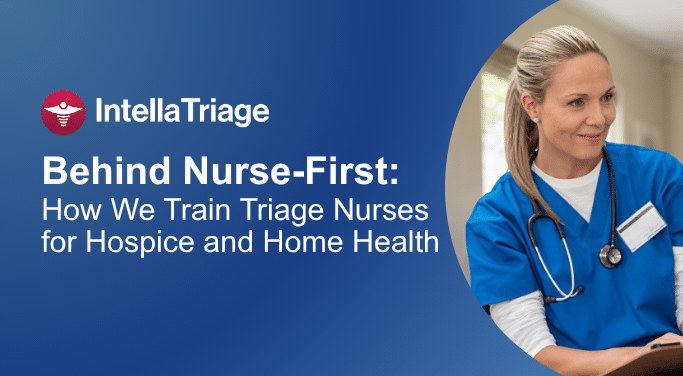
Nurse triage comes in many shapes and sizes, but at its core, this specialized service utilizes highly trained registered nurses to help lighten and manage a healthcare organization’s call load. Acting as the first line of defense, these nurses provide tremendous support to staff nurses – particularly on-call nurses – and, in turn, ease the financial and operational burden of burnout, turnover and compassion fatigue.
The Role of a Triage Nurse
Triage nurses can accommodate more than just symptom based call management; the clinical expertise of a licensed nurse allows for coverage of calls for a variety of reasons, including hospice triage, home care triage, DME facilitation, admissions, referrals, pre-screening for tests and procedures, post-operative/procedure follow-up calls, new medication or treatment compliance, complex or chronic case management and physician practice triage. Whether you’re in need of support during nights, weekends, or 24/7, nurse triage services can be tailored to your organization’s unique needs.
Nurse Triage Improves Patient, Caregiver and Employee Satisfaction
Healthcare organizations that utilize nurse triage services to allow core staff to focus on the face-to-face patient interactions are proven to see increased patient and caregiver satisfaction scores, reduced nurse burnout and turnover and improved operational efficiency. By investing in this unique service line, organizations can ensure that patient needs are being met at the appropriate level of care by the appropriately licensed professional. Does your healthcare organization provide appropriate and safe clinical advice, prevent unnecessary readmissions, empower patients in self-care, ensure appropriate ED utilization and initiate referrals to care providers and services within your organization? If the answer is no to any of these, it may be time to consider implementing an outsourced nurse triage service.
IntellaTriage: Your All-In-One Solution
A consistent stressor for hospice field nurses is the volume of calls they receive after-hours. IntellaTriage nurses act as an extension of the care team, able to handle up to 75% of calls, including symptom management, medication refills and even emotional support. In turn, IntellaTriage is helping organizations across the nation address nurse burnout and turnover, improve patient and caregiver satisfaction and realize cost savings. If you’re ready to transform your after-hours care, contact us today.
This post was originally published in September 2018 and has been completely revamped and updated for accuracy and comprehensiveness.
Contact Us for a Consultation
Ready to optimize your triage process? Reach out to us today for a consultation tailored to your needs. Let’s elevate your patient care together.
More From The Blog

Nursing school doesn't teach telephone triage. A nurse with fifteen years of bedside experience has likely assessed thousands of patients. But when that assessment moves to the phone, visual cues disappear: skin color, breathing effort, positioning, whether the caregiver is "holding it together." A telephone triage nurse must rebuild that picture using questions, active listening, [...]
A hospice or home health nurse arrives for a scheduled patient visit. Then their cell phone rings with a medication question, a scheduling issue, a caregiver concern... a call that needs to be routed elsewhere. Individually, each type of interruption may seem manageable. Across an entire care team and multiple scheduled visits, they add up [...]
Every triage vendor can hand you a feature list, and most of them overlap. Twenty-four-seven coverage. EMR access. Reporting dashboards. HIPAA compliance. Line the sheets up side by side, and the vendors start to look interchangeable. They aren't. The feature list is just the wrong instrument for telling them apart, because while standard features describe [...]