Home Health and Hospice Case Studies
Practical insights for better care and stronger teams
After-hours calls are one of the hardest elements for home health and hospice organizations to staff well. These case studies show how agencies partnered with IntellaTriage for nurse-led after-hours triage, so non-urgent overnight calls no longer pull field nurses away from patients. Families reach a nurse in seconds, operations run more efficiently, and call data helps improve daytime care. Results are as reported by each organization.
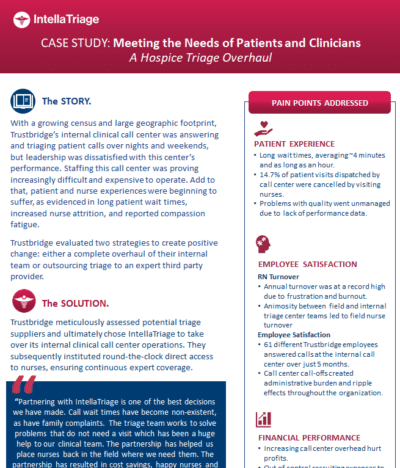
Trustbridge | Hospice
A Triage Overhaul
Trustbridge’s internal call center was expensive to staff, patients waited about four minutes on average (sometimes an hour), and nurse turnover was at a record high. After moving to 24/7 IntellaTriage nurse coverage, patients now reach a nurse in an average of 32 seconds, first-call resolution rose from 22.5% to 73%, and the organization saves more than $1 million a year.
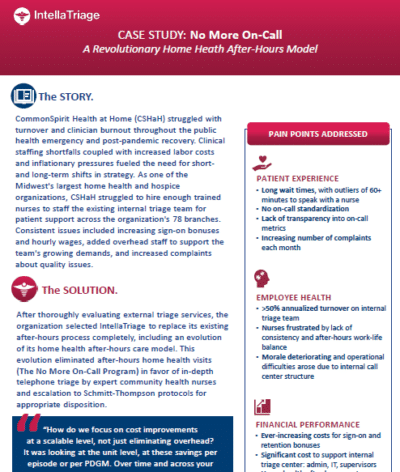
CommonSpirit Health at Home | Home Health
No More On-Call: A New Home Health After-Hours Model
Across 78 branches, CommonSpirit Health at Home faced more than 50% annualized turnover on its internal triage team and waits of 60+ minutes for a nurse. By replacing after-hours visits with in-depth nurse phone triage and escalation, it cut average time to reach a nurse to 29 seconds, saved 696,000 nurse minutes, and reduced skilled nursing visits per episode. 84.6% of team members say their work-life balance improved.
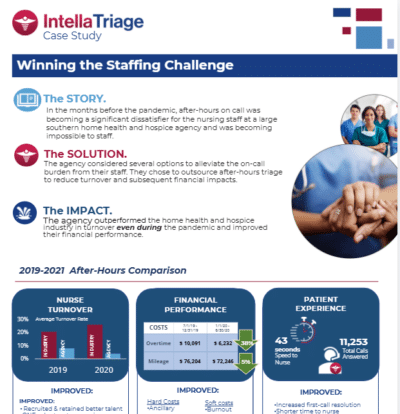
Large Southern Home Health and Hospice Agency | Home Health and Hospice
Winning the Staffing Challenge
On-call coverage had become the top dissatisfier for this agency’s nurses and was nearly impossible to staff. After outsourcing after-hours triage, it outperformed industry turnover during the pandemic (one voluntary turnover in 2020), cut overtime costs by 38%, stopped paying sign-on bonuses, and reached patients in an average of 43 seconds.
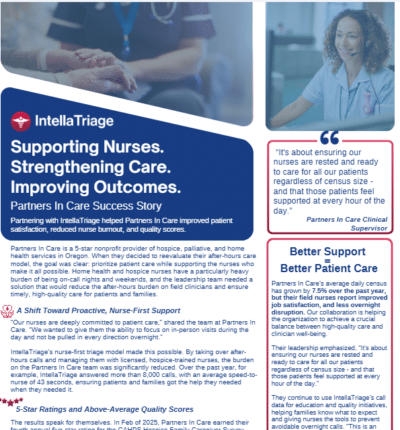
Partners In Care | Hospice, Palliative, and Home Health
Supporting Nurses. Strengthening Care. Improving Outcomes.
Partners In Care, a five-star nonprofit provider in Oregon, wanted nurses rested for daytime visits without compromising patient support. With IntellaTriage answering after-hours calls (8,000+ in a year, averaging 43 seconds to a nurse), the agency scored 84% on the CAHPS “Getting Timely Help” measure, compared with 74% for Oregon and 77% nationally, while its census grew 7.5%.
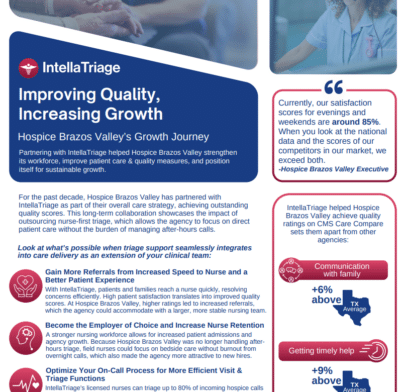
Hospice Brazos Valley | Hospice
Improving Quality and Supporting Sustainable Growth
After a decade-long partnership with IntellaTriage, Hospice Brazos Valley’s field nurses focus on bedside care, not overnight calls. Its evening and weekend satisfaction scores are around 85%, and it rates above the Texas average on CMS Care Compare for communication with family and getting timely help. Stronger retention and ratings have supported more referrals and sustainable growth.
More to explore
Answering the Call: How Hospice Organizations Can Improve Nurse Job Satisfaction, Patient Experience & Cost-Savings
This special report covers the hospice nursing shortage, the causes of burnout and turnover, how after-hours call models compare, and a checklist of criteria for choosing a triage service. It includes additional case studies.
Talk to a triage expert about your after-hours coverage
Every agency’s staffing model, patient population, and after-hours needs are different. Tell us how you handle after-hours calls today, and we’ll help you figure out what support would fit.